One MRL for the EU and the UK: what changes in 2028
How many times have you checked the same residue twice, once against the EU limit and once against the British one? That is about to end.
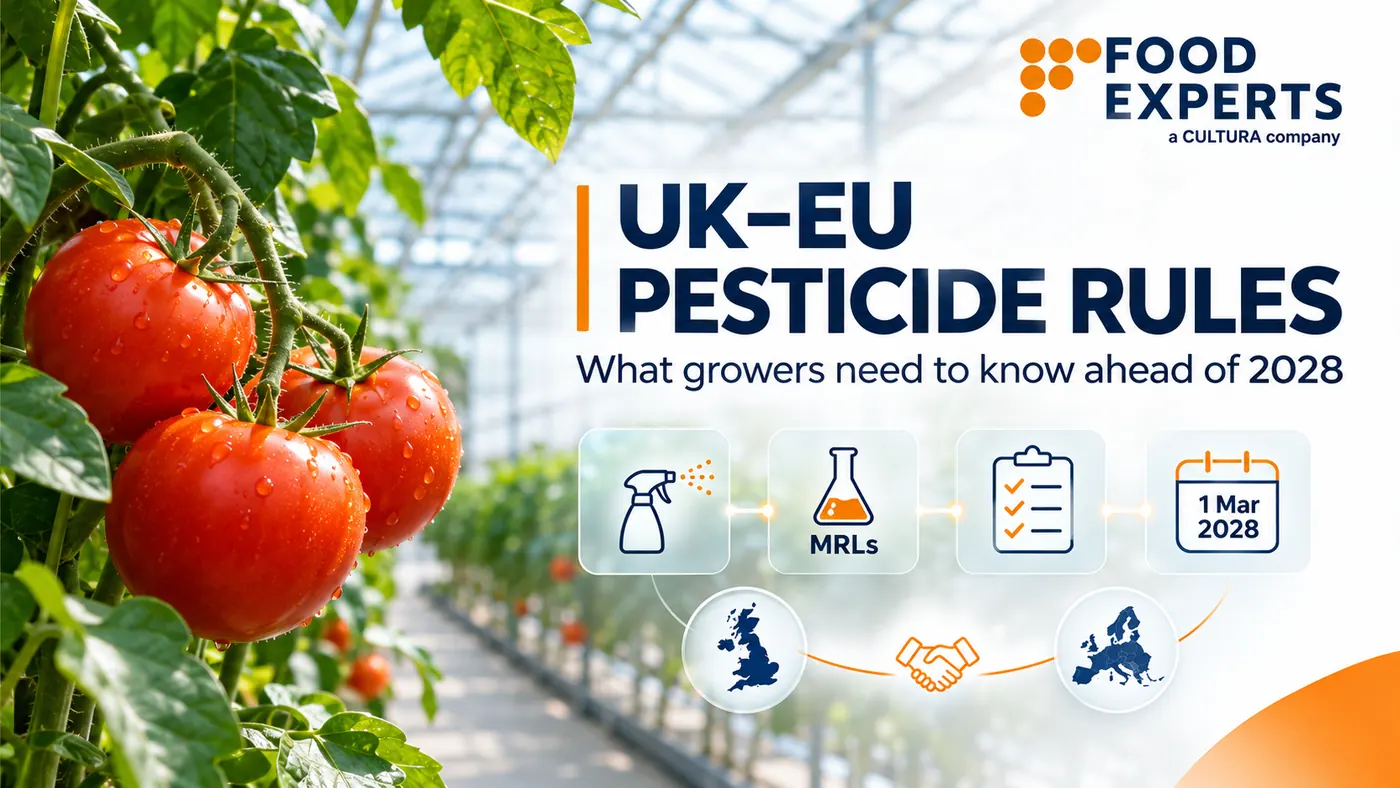
On 20 November 2026, the UK Government published how pesticide rules will change in Great Britain under the new UK–EU Sanitary and Phytosanitary (SPS) Agreement. The core idea is simple: Great Britain is adopting EU rules.
The essentials in 30 seconds
- One MRL for the EU, Great Britain and Northern Ireland.
- Nothing changes in the 2027 season. Current rules still apply.
- Some plant protection products authorised in Great Britain today will be withdrawn or have their conditions of use changed.
- There will be a transition period, and during it goods that only meet British rules cannot go to the EU or Northern Ireland.
Dates to note
- 1 July 2027. The arrangement allowing EU-treated seed to be used in Great Britain ends.
- Early 2027. HSE, the British pesticides regulator, starts engaging with the sector to review products.
- 1 March 2028. EU rules take effect.
- 1 June 2028. Last day to sell products containing substances not approved in the EU. They can be used until 1 December 2028.
- 1 December 2029. Deadline to use products with EU-approved substances whose British authorisations do not meet EU requirements.
Three active substances have their own arrangement, because the EU has not yet decided on them: cinmethylin, pydiflumetofen and isoflucypram. They stay on the market until that decision. If it is negative, they will be withdrawn within three months.
What does it mean for you?
If you grow
The guidance is clear: whoever places the crop on the market is responsible for meeting the MRL. So it makes sense to review your crop protection programme now and plan alternatives for products that may disappear. Watch the Extensions of Authorisation for Minor Use (EAMUs): many horticultural crops rely on them, and they could also be affected.
If you export or import
This is the best news in the change: one limit for two markets. But during the transition, two kinds of goods will coexist in Great Britain. Produce grown under the previous British rules can only be sold there and must be kept separate and traceable.
If you are in retail
You will need to make sure you only sell goods that comply or qualify for the transition. And you will need to identify which batches fall into each case, especially if they move from Great Britain to Northern Ireland.
What we don't know yet
The guidance is a summary. The detailed legislation, the list of products that will need to change and the rules for moving food from Great Britain to Northern Ireland are still to come. The UK Government expects the operational details by early spring 2027.
In the meantime, the advice is the same for the whole chain: avoid overstocking products you may not be able to use in time, talk to the buyer before treating, and keep records of every treatment.
How FoodExperts helps
Many of the companies we work with export to the UK, so we will follow this change step by step. At FoodExperts we bring MRLs, active substances and the traceability of every supplier together in one place, so you always know what complies and where. Find out more on our food safety page.
The full guidance is on GOV.UK.